Regional Working Group Meetings

Regional Working Groups

GfT shares knowledge and enables exchange on friction, wear and lubrication. Its regional working groups promote knowledge transfer and connect tribology professionals from research and industry.

Working group meetings generally take the form of colloquia at which experts present topics from tribology and related fields. Discussions take place immediately after the presentations or in an informal setting over drinks and snacks. Where possible, excursions and company visits are also organised. Participation is free of charge, and many presentations can also be attended online. Recordings of selected talks are subsequently available on GfT's YouTube channel. Select a working group to learn more.

The markers represent the regional scope of the working groups and do not indicate permanent locations.

Northwestern Germany

GfT Working Group Hanover / Northwest

Representative map location: Hanover

Regional exchange on current tribological issues between academia and industry.
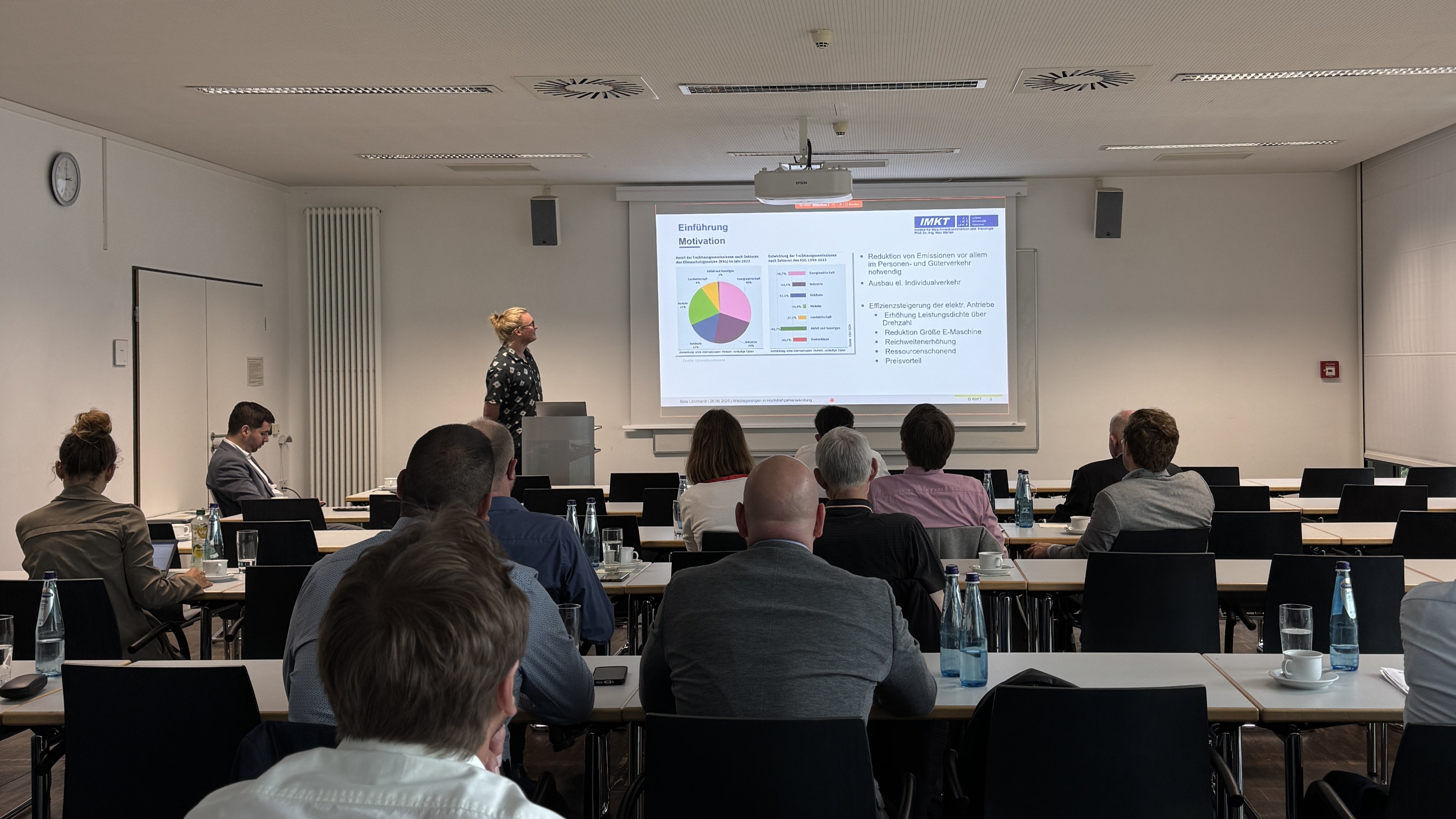
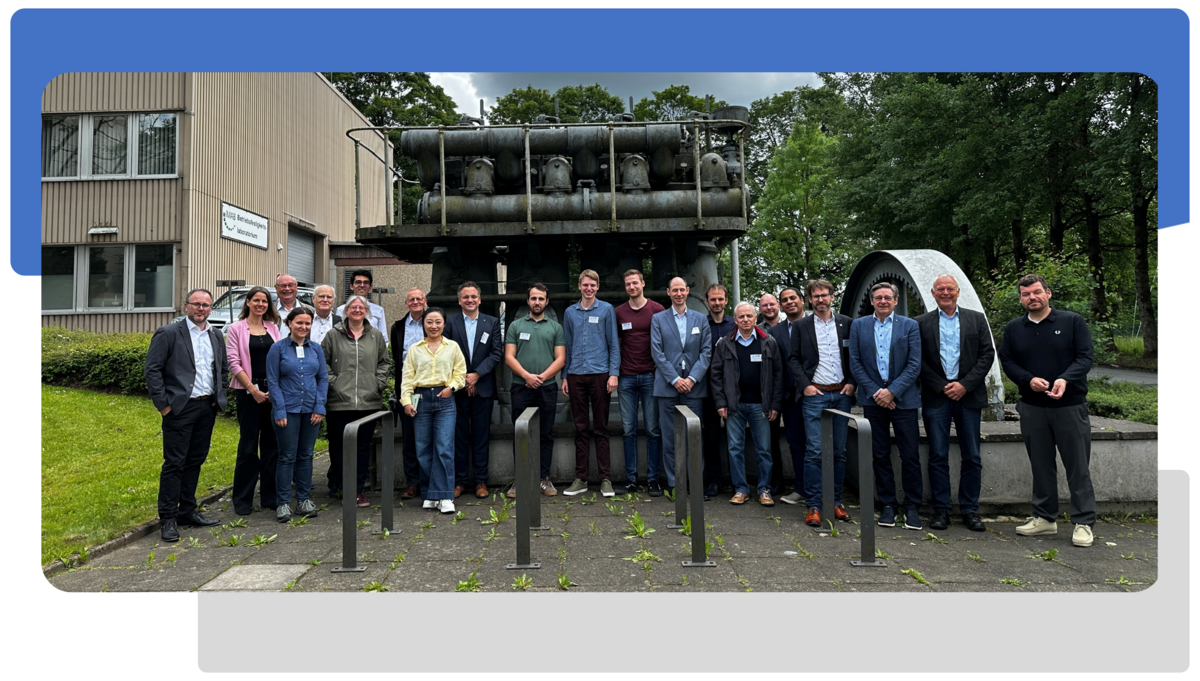
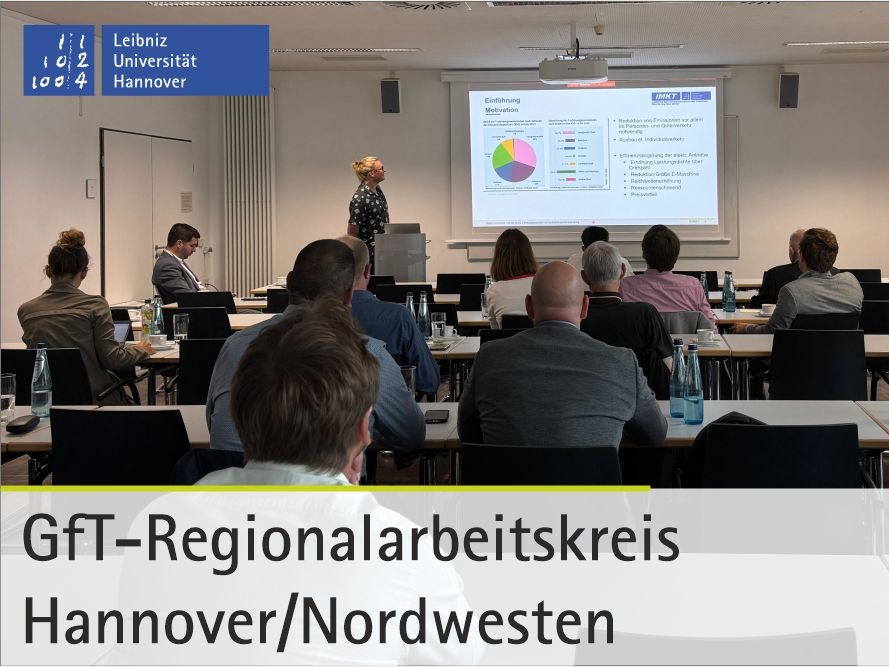
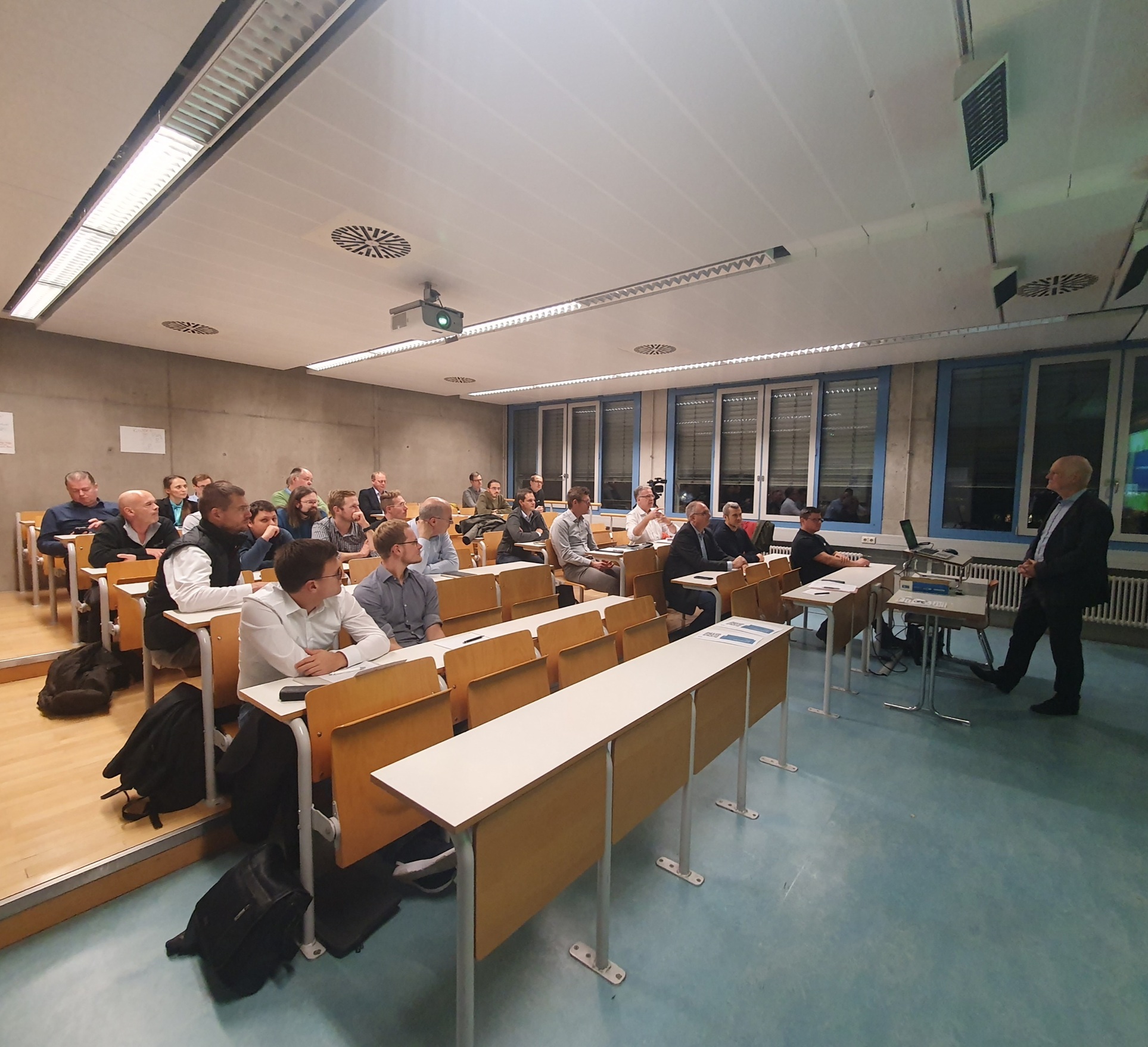
Presentation to participants of the GfT Working Group Hanover/Northwest in June 2025

The GfT Hanover Working Group is one of the German Society for Tribology's oldest regional working groups. Following an extended break, it was relaunched in 2025 with a broader group of participants and the active involvement of colleagues from Leibniz University Hannover, Clausthal University of Technology, Paderborn University and Emden/Leer University of Applied Sciences.

The working group aims to promote professional exchange on current tribological issues in northwestern Germany and to provide a platform for knowledge transfer between industry and academia. Its topics cover the entire tribological system chain – from materials and lubricants to testing methods and application-oriented developments in mechanical engineering, mobility and energy.

The opening event of the relaunched series took place at the Institute of Machine Design and Tribology (IMKT) at Leibniz University Hannover in June 2025. It focused on tribological challenges in electromobility, particularly the effects of high rotational speeds and electrical loading on machine elements and lubricants in electrified powertrains.

In future, one or two events will be held each year, each with a clearly defined thematic focus. This format will address current challenges and bring together different perspectives from research and practice. The working group is open to everyone interested in the subject and sees itself as a vibrant network promoting tribology in research, teaching and application.
Prof. Dr.-Ing. Max Marian

Rhine-Neckar

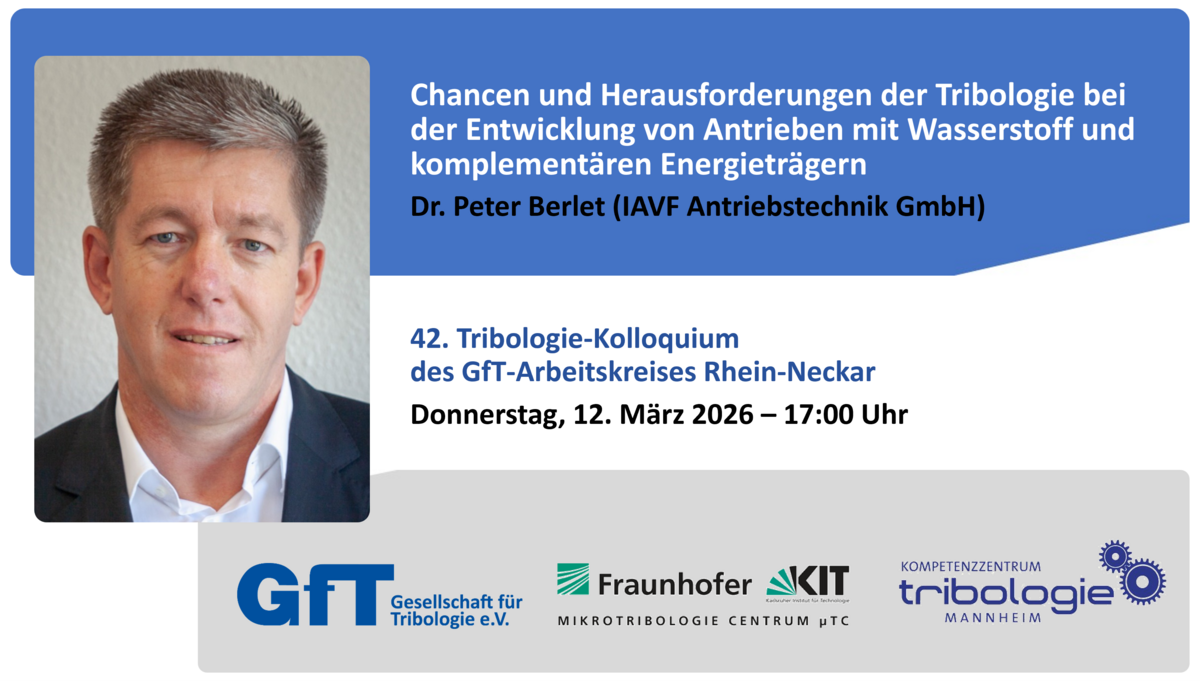
GfT Working Group Rhine-Neckar

Representative map location: Mannheim

Tribology colloquia featuring specialist presentations, discussion and personal networking.

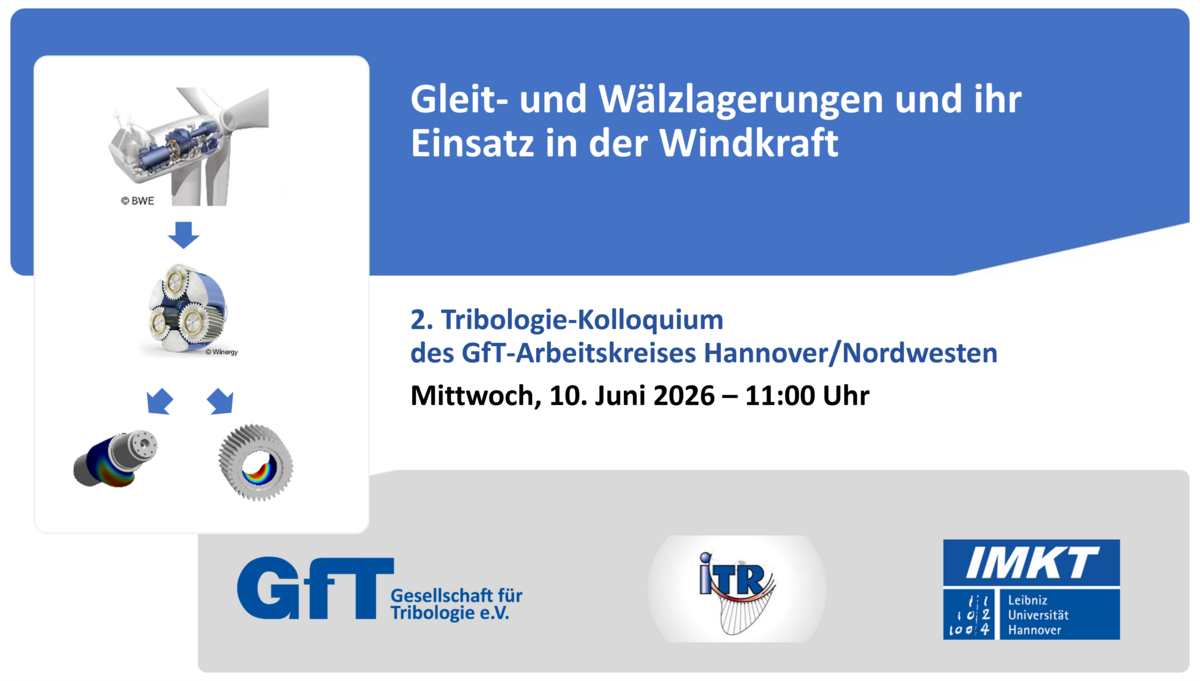
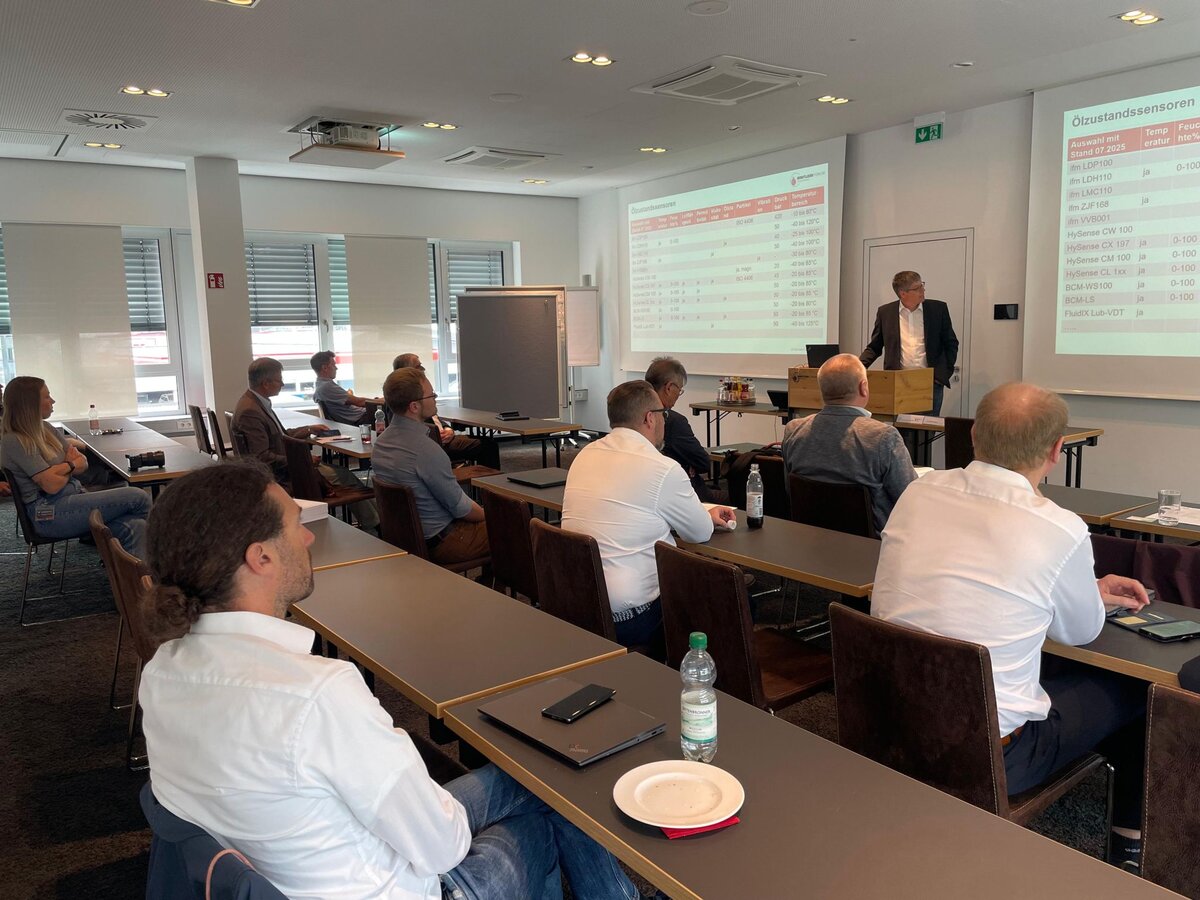
Participants at a tribology colloquium of the GfT Working Group Rhine-Neckar

Tribology colloquia have been held regularly at Mannheim University of Applied Sciences since 1996, bringing together experts and interested participants. The first colloquium addressed “Environmentally compatible lubricants as an alternative to mineral oil products” – a subject that remains relevant today. Originally organised by Prof. Dr. Paul Feinle, who assumed the endowed chair of tribology in 1993, the events feature engaging presentations by industry specialists. Dr. Markus Grebe has led the working group since 2021 and, as scientific director of the Mannheim Tribology Competence Centre, continues to provide fresh impetus. Regularly attracting between 12 and 60 participants, including many students, the colloquia provide a platform for knowledge transfer, discussion and personal networking. Traditionally, refreshments round off each event and encourage further exchange. Since 2023, the colloquia have also been streamed and recorded, making them available to a wider audience on GfT's YouTube channel.

Dr. Markus Grebe

Southern Germany

GfT Working Group Munich

Representative map location: Munich

Interdisciplinary exchange on tribological topics in southern Germany.

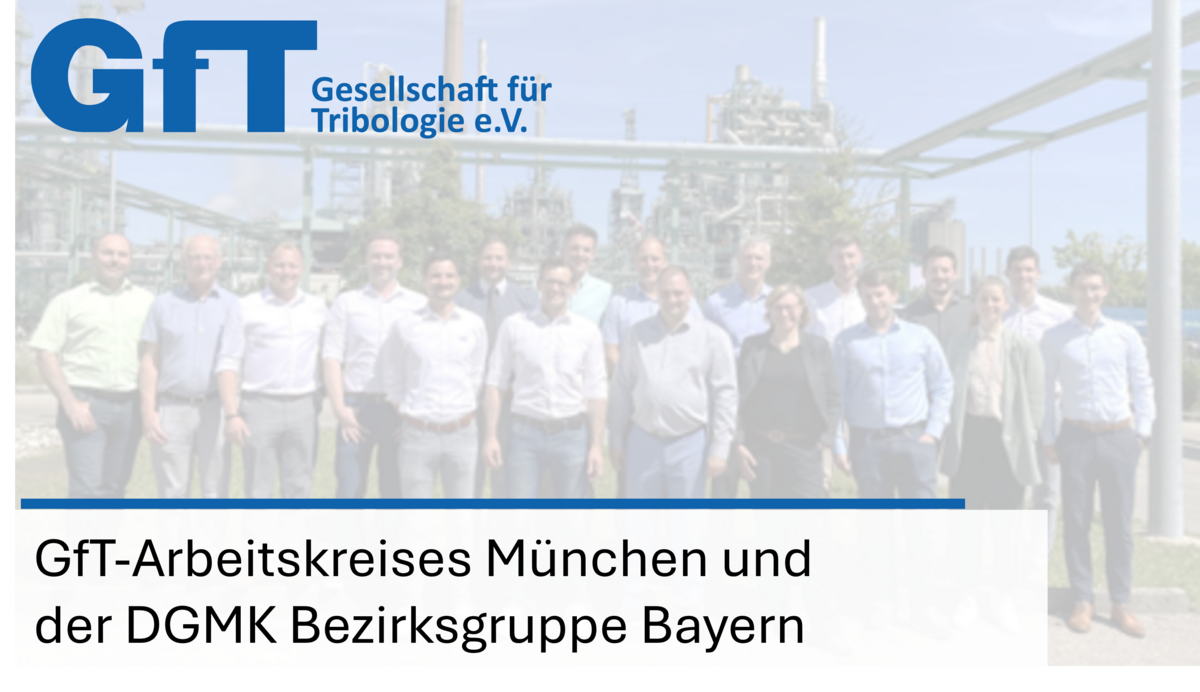
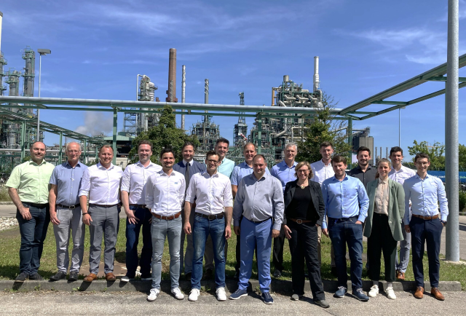
Group photo at a GfT Working Group Munich event on an industrial site

The GfT Munich Working Group was founded in 2018 to establish a tribology network in southern Germany. It is organised by the Gear Research Centre (FZG) at the Technical University of Munich (TUM). Since its first colloquia in November 2018 and April 2019 on topics such as “Numerical methods in the tribology of gear transmissions”, the working group has become an established platform for interdisciplinary exchange. Special events, including meetings at Oelcheck in 2019 and a plant tour at OMV Operations in 2024, offer valuable insights into both research and practice. Following a break caused by the pandemic, the colloquia resumed in 2022 and were combined with meetings of the DGMK Bavaria District Group to create synergies between the two subject areas. Highlights such as presentations on “Sustainable fuels and lubricants in the context of the energy transition” demonstrate the importance of these events for a sustainable future.

Gear Research Centre (FZG), Technical University of Munich (TUM)

Berlin-Brandenburg

GfT Working Group Berlin-Brandenburg

Representative map location: Berlin

Regional working group for professional exchange, colloquia and current tribological topics.

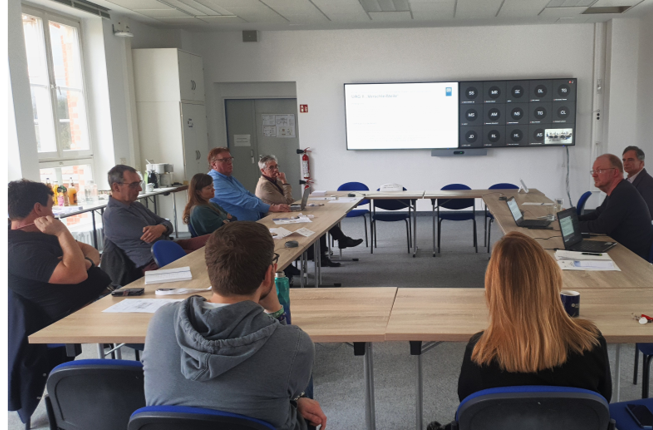
Meeting of the GfT Working Group Berlin-Brandenburg in a seminar room

Since it was founded by Dr. Wolfgang Hübner in October 1991, the GfT Berlin-Brandenburg Working Group has been an integral part of GfT. After its early activities in Berlin and Magdeburg, its colloquia are now held regularly at the Federal Institute for Materials Research and Testing (BAM) in Berlin under the direction of Dr. Gradt. On 14 March 2024, the year's first colloquium explored “Wear parts – small cause, major effect” with 26 participants attending on site and online. Stefan Schridde, head of a DIN working group on wear parts, examined the associated technical, economic and environmental challenges. Particular attention was paid to the absence of a definition for wear parts, which prompted a lively discussion within GfT. The results of this debate, shaped substantially by the Göttingen Circle, will be presented at this year's Tribology Conference and provide important impetus for future standards and sustainability strategies.

Dr. Gradt

Working groups overview

News from the Working Groups